Wednesday, 23 January 2013

Four Classes of Hindu Society


The sages gave each of these types a name.

< Kashatriyas : motivated by power
< vaishyas      : motivated by material objects
< Brahmins    : motivated by knowledge
< Shudras     : unmotivated people

The kshatriyas are your kings and queens. They're your top-level executives and administrators. They're also your military and police personnel, the ones who use force to keep order. For most of its history, India was a patchwork of numberless little kingdoms. So the kshatriyas were primarily your maharajahs and maharanis, your princesses and dukes and their families, and the warriors they retained to help protect those they ruled and conquer those they didn't.

Vaishyas are your business people, traders people, artisans, farmers. Your skilled labor. Brahmins are priests, counselors, educators, philosophers. In India until fairly recently, brahmins were primarily responsible for preserving the Veda and were valued as ritual specialists. Today more brahmins are moving into other fields, such as politics, administration, and medicine. Shudras are your unskilled laborers.

Originally the varnas, or four castes as these groups are called, were somewhat fast and loose designations. But in India as in much of the rest of the world, children learned their trade from their parents.

What Turns you On?


What turns people on? The Hindu sages noted that there are basically four distinct personality types.


The first type is people whose primary passion in life is power. They feel most alive when they're controlling others. They would be miserable if they couldn't express their need to be in charge.

Another personality type is mostly motivated by material things. These folks want to be wealthy.Their satisfaction comes from producing or owning things. Their worst fear is poverty. Or sometimes simply having less than other people do.


The third kind of person is oriented more toward the inner world. It's ideas that turn them on, and internal experiences like spiritual visions. Give them a book, have them teach a class, or let them sit quietly thinking or meditating, and they're happy as ducks in a pond.

Then there are your burger flippers. These are the people who don't particularly want to rule the world. And they aren't money hungry enough to work their way up to a job. They don't necessarily long to be the world's leading philosophers either. They're content and relax with friends and family.


Guidepost


Ever feel like an outcast? Sad to say, the outcastes of India probably feel even worse. Mahatma Gandhi renamed this group of people Harijans, "the children of God".Outcaste status was outlawed in 1950. Today all Hindus are equal before the law.

A Classy Religion


Hindu culture is tightly structured. Everyone knows where they belong-and where they don't. If you're a Hindu, many of life's choices are made for you. What your job will be. Who you'll marry. The class of people you'll hang out with.

For those of us who've grown up in the individualistic West, where our right to self-determination is a paramount value, the hierarchical societies of the East may seem stifling, even inhumane. Yet many Hindus would not trade their way of life for ours. Hindus who move to the West often complain that compared to home, Western culture seems cold and selfish.

Let's look at the way Hindu society organizes itself, and the religious purpose for this way of life.

How Hindus Live


Hindus live in a tightly ordered, hierarchical world with clear moral values. Although India is technically a secular state, for practicing Hindus there is no such thing as a secular life. Everything occurs within the context of religion. Sacraments for every Hindu begin before birth and continue after death. Holy days are frequent. Activities are oriented, directly or indirectly, toward the ultimate goal of Hindu spirituality : liberation of the soul from the bondage of karma and rebirth.


Mother India herself is sacred. You can't travel far without reaching one pilgrimage center or another. Temples appear everywhere, though the most familiar one is right in each Hindu's own home.

Here is how the saints and sages of the Eternal Religion counseled Hindu men and women to structure their society-and how to live with each other and find peace with themselves.

Adi Shankara


Shankara travelled across the subcontinent to propagate his philosophy through discourses and debates with other thinkers. He is reputed to have four mathas ("monasteries"), which helped in the historical development, revival and spread advaita Vedanta of which he is known as the greatest revivalist Adi Shankara is believed to be the organizer of the Dashanami monastic order and the founder of the shanmata tradition of worship.

His works in sanskrit concern themselves with establishing the doctrine (nondualism). He also established the importance of monastic life as sanctioned in the upanishads and the Brahma Sutra in a time when the mimamsa school established strict ritualism and ridiculed monasticism.

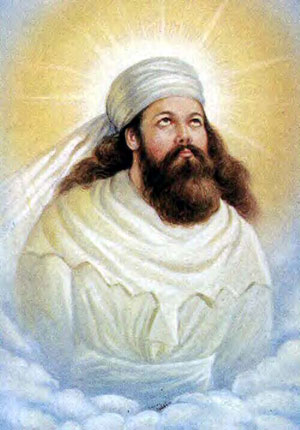
The Zoroastrian Connection


Zoroastrianism is immensely ancient. According to the Hindu tradition, Zoroaster would have lived long before 40000 B.C.E. ( He is mentioned as an ancient renegade teacher several times in the Rig Veda, which was composed somewhere around 4000 B.C.E) Aristotle, the ancient Greek philosopher, confirms that the Persians of his time dated Zoroaster to around 6000 BC.E (Western scholars have been extremely reluctant to accept such ancient dates for Zoroaster).

Zoroaster is one of the most important figures in religious history. When he broke with Hinduism, he established a new set of beliefs which much later would work ideas include the linear nature of time with history ending on Judgment Day, the rest resurrection on the physical body, and the promised return of a savior to inaugurate a millennial period of peace on earth. He also taught the existence of the Devil, a malevolent being nearly as powerful as God.

Hindus accept a modified version of the history of the returning savior. None of Zoroaster's other ideas is accepted in Hinduism.